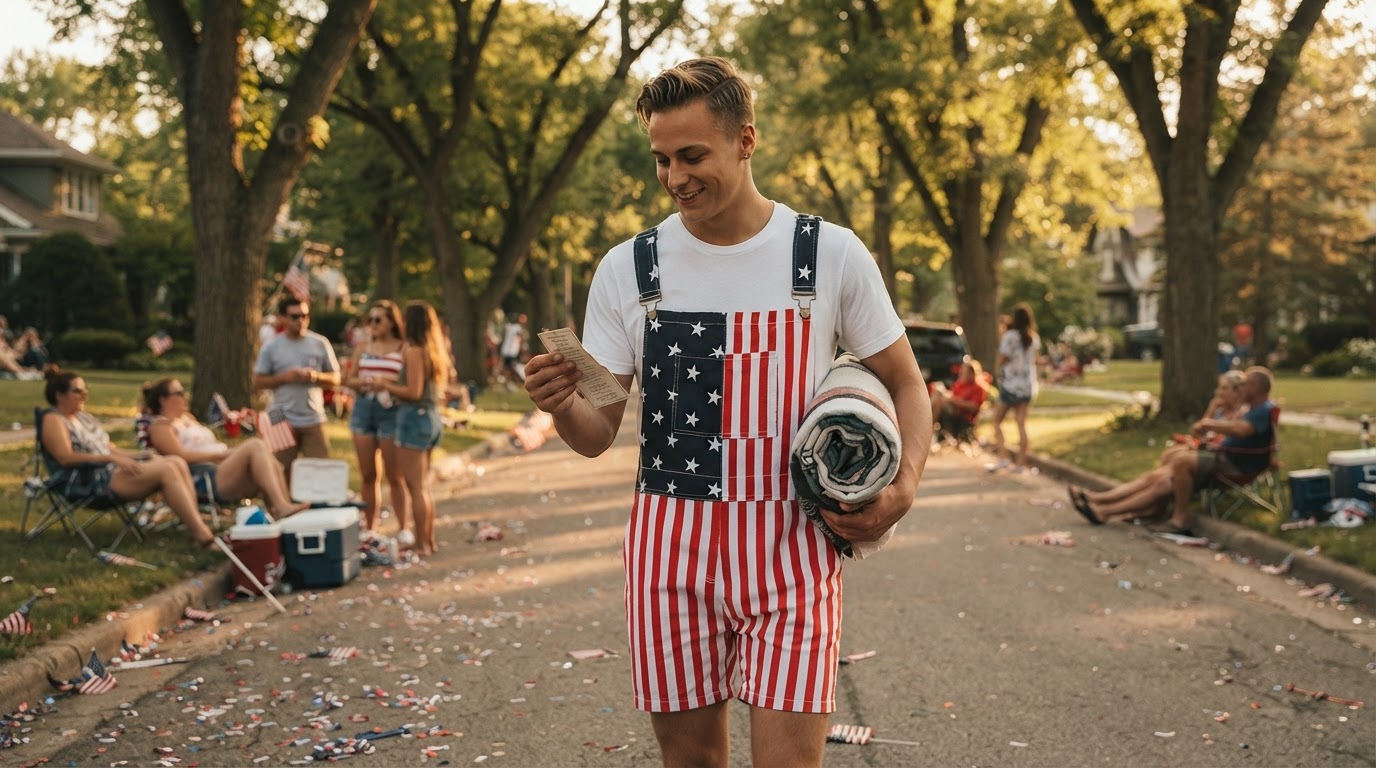
The Flag Overall Tests I’d Run Before a Sweaty July Parade Route
I’d rather wear 10-ounce cotton twill than 12-ounce denim for a July parade if the route is longer than one mile. That sounds backwards if you equate “heavier” with “better,” but after comparing how bib overall fabrics behave in heat, in a crowd, and after washing, the lighter midweight pair usually wins for comfort without giving up much durability.
American flag overalls are a weird category in the best way: part apparel, part costume, part tailgate uniform, and sometimes actual workwear. That makes the buying decision less obvious than “pick the boldest stars and stripes.” A pair that looks great in a product photo can feel swampy at a noon cookout, while a slightly duller cotton twill pair may become the one you actually wear every Memorial Day, Independence Day, Veterans Day event, rodeo, or game-day tailgate.
Here’s my comparison framework for choosing between the three common types of American flag overalls: rigid denim, cotton twill/canvas, and stretch blends.
The three-overall comparison most buyers should make
When I compare American flag overalls, I separate them into three practical buckets:
The mistake is assuming one is universally superior. I use a different question: what failure would ruin the day first? For some people it’s a torn seam. For others it’s heat stress, chafing, dye bleeding into a white shirt, or having nowhere secure to put a phone.
That changes the “winner.”
My field-style observations: the numbers that matter
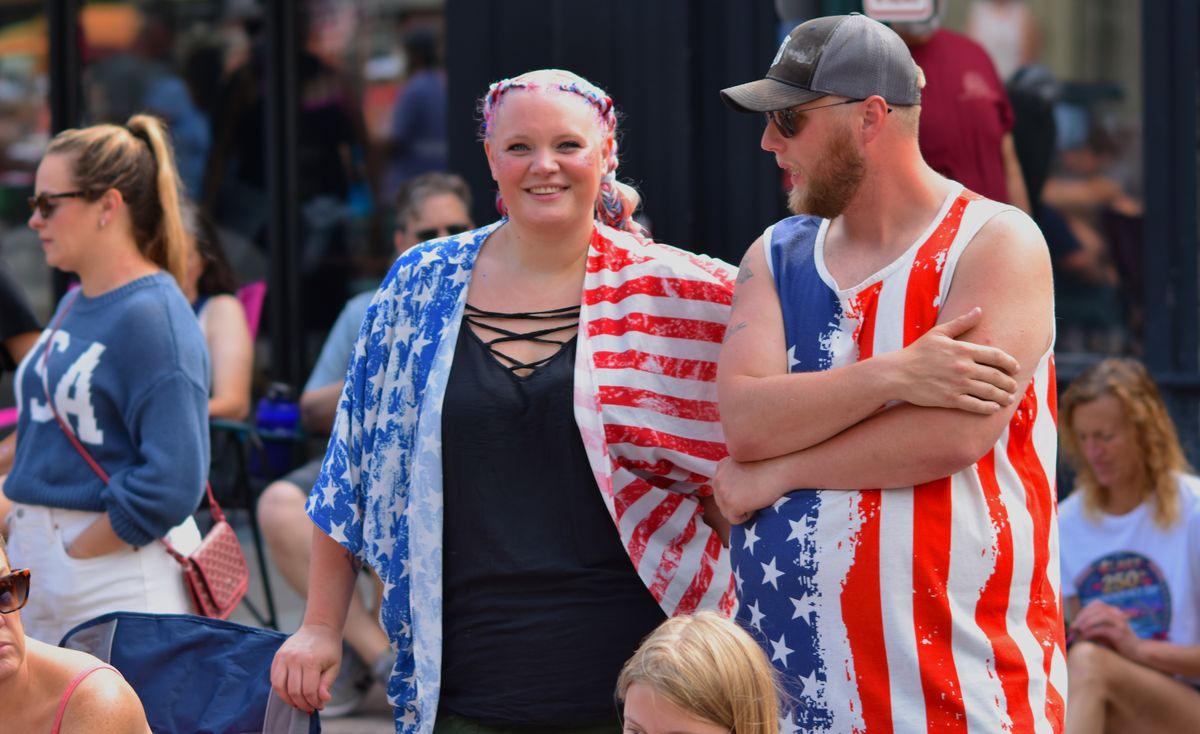
Photo by Charles Criscuolo on Pexels
Below is the kind of quick comparison I’d run before recommending a pair for a specific event. These are not lab certifications; they’re practical buyer checks based on garment weights, pocket dimensions, wash behavior, and wear scenarios I see matter most with patriotic overalls.
| Test or observation | Rigid denim overalls | Cotton twill/canvas overalls | Stretch blend overalls | Why it matters | |---|---:|---:|---:|---| | Typical fabric weight range | 11–14 oz/yd² | 8–11 oz/yd² | 7–10 oz/yd² | Heavier fabric can last longer but traps more heat | | Comfortable parade threshold, in my view | Under 60–75 min in direct sun | 90–150 min with breaks | 90–150 min if not too tight | Heat buildup beats durability on hot pavement | | Break-in time | 2–5 wears | 1–3 wears | Usually same day | Stiff bibs rub shoulders and chest | | Phone pocket fit target | 6.3 x 3.1 in minimum | 6.3 x 3.1 in minimum | 6.3 x 3.1 in minimum | Fits many large phones without forcing the flap | | First wash risk | Indigo or red crocking | Moderate red/navy bleed risk | Lower wrinkle, possible print wear | Wash separately before wearing with white shirts | | Strap comfort | Good after softening | Usually good immediately | Good, but can bounce if elasticized | Strap hardware can become the annoyance point | | Best use case | Rodeo, cooler nights, rugged wear | Parades, BBQs, tailgates | Dancing, games, long walking days | Match fabric to the actual day |
A useful benchmark comes from the textile testing world: ASTM D5034 is a standard grab test used to measure breaking strength and elongation of textile fabrics. Most shoppers will never see a D5034 report for novelty overalls, but the idea behind it is important: seam and fabric strength are measurable properties, not vibes. If you tug on the bib corner, strap anchor, and side button placket, you’re doing a crude consumer version of asking, “Where is this garment likely to fail?”
Heat comfort beats fabric toughness on patriotic-event days
For American flag overalls, the most common wearing environment is not a cool workshop. It’s a hot sidewalk, a stadium lot, or a crowded backyard.
That’s why I weight heat comfort higher than raw toughness for most buyers. The National Institute for Occupational Safety and Health has long emphasized that heat stress risk rises with environmental heat, exertion, clothing, and hydration status. You do not need to be on a construction site for the principle to apply. Walk a two-mile parade route in direct sun while wearing a bib layer over a T-shirt, and your clothing choice matters.
The important comparison is not just fabric weight. It is coverage plus airflow. Overalls cover the torso twice: once with your shirt and again with the bib. A stiff denim bib can sit close to the chest and reduce air movement. A lighter twill bib may gap slightly and feel cooler. A stretch blend may move well but cling more if sized too tight.
For summer events, I’d prioritize:
- 8–11 oz/yd² cotton twill or canvas over heavy denim
- A slightly relaxed waist and hip fit
- Adjustable straps with enough extra length to lower the bib slightly
- A white or light moisture-wicking shirt underneath
- Side buttons or openings that allow easier ventilation
Durability: where overalls actually fail
Most people look at the leg fabric first. I look at the stress points:
- Strap attachment at the back
- Buckle and slider hardware
- Bib top corners
- Side button placket
- Crotch seam
- Front pocket corners
- Hammer loop or utility loop stitching, if present
This is where denim can beat lighter fabrics. A 12-ounce denim pair with bar-tacked stress points will usually tolerate more kneeling, climbing, and repeated pocket loading than a lighter stretch blend. But if the denim pair has weak hardware or sloppy seam finishing, the fabric weight does not save it.
ISO 13934-2, another textile tensile test method, reinforces the same broader lesson: textile performance depends on construction, not just fiber name. “Cotton” alone does not tell you enough. “Denim” alone does not tell you enough.
Print method: woven look, garment dye, or surface print?
American flag overalls vary a lot here. The stars and stripes might be woven into the fabric, printed on top, garment dyed, patchworked, or assembled from different fabric panels.
Here is my buyer translation:
Woven or yarn-dyed patterns
These usually age better because the color is integral to the yarns or panels. The look may be less razor-sharp than a surface print, but fading tends to look natural.
Surface-printed designs
These can look vivid out of the package. The risk is cracking, abrasion, or fading on high-friction areas like the thighs, bib edge, and seat. If you want the brightest possible party look for a few big events, this may be fine.
Patchwork or panel construction
This can look excellent when done well, especially with stars on the bib and stripes on one or both legs. But every extra panel is another seam. Inspect seam alignment and whether the stripes match cleanly across pockets or side seams.
The American Association of Textile Chemists and Colorists publishes colorfastness test methods used by the industry, including laundering and crocking evaluations. You probably will not get AATCC ratings on a casual retail page, but you can still use the concept: red and navy dyes deserve suspicion until the first wash proves otherwise.
Counter to what you’ll read elsewhere: faded can be better
My take: the most wearable American flag overalls are often not the loudest red-white-and-blue pair on the page. Slightly faded navy, softened red, and off-white stripes usually look better after the first season because they hide wash change, dust, grill smoke, and sunscreen marks.
A hyper-bright surface print can win the first photo. A yarn-dyed or washed twill pair often wins the fifth wear.
This is especially true if you plan to wear the overalls beyond July 4th. A weathered flag look pairs better with boots, plain tees, flannels, trucker hats, and work jackets. It reads intentional rather than costume-only.
Fit comparison: bib overalls are not jeans with straps
Overalls need more ease than pants. If you buy your usual jeans waist with no extra room, you may feel tightness when sitting, walking uphill, or reaching overhead.
Here is the fit rule I use:
- Waist: allow 1–2 inches more room than slim jeans
- Hips/seat: enough room to squat without pulling the straps hard
- Inseam: full break is fine; cuffing is common and practical
- Bib height: should cover the sternum without choking the neck
- Straps: should adjust with at least 1.5 inches of spare travel either direction
Stretch blends complicate this because they feel comfortable at first even when undersized. The problem appears later: pocket openings warp, the bib pulls, and the straps carry more load than they should. If you choose stretch, do it for mobility, not as permission to size down.
Pocket comparison: the phone test is non-negotiable
Old-school overalls were designed for tools. Modern patriotic overalls need to carry a phone, keys, wallet, sunglasses, and maybe a parade-route snack.
Before wearing them out, run this pocket checklist:
A bib pocket should be at least about 6.3 inches tall and 3.1 inches wide to fit many large phones. A secure flap, snap, or deep divided bib pocket is a meaningful feature, not decoration.
For festivals or crowded events, I prefer a bib pocket with a closure over an open chest pocket. It is easier to monitor than a rear pocket and harder to forget than a loose hand pocket.
Wash test: do this before the first public wear
The first wash tells you whether the overalls are event-ready. The Federal Trade Commission requires care labels on covered textile wearing apparel in the U.S., and those labels are there for a reason. Follow them, but add a color-risk routine for patriotic garments.
My first-wash checklist
- Wash the overalls alone or with dark towels.
- Use cold water.
- Turn them inside out.
- Fasten buckles and buttons to reduce abrasion.
- Use a mild detergent, not bleach.
- Remove promptly to reduce creasing and dye transfer.
- Air dry the first time if you are worried about shrinkage.
- Wipe the washer drum after washing vivid red or navy garments.
Decision framework: which pair should you buy?
Here is the comparison I’d use if a friend asked me what to choose.
Choose rigid denim American flag overalls if...
You want structure, a vintage workwear feel, cooler-weather usefulness, and better abrasion resistance. Denim is also the better pick if you’ll kneel, climb, carry tools, work a booth, or wear the overalls repeatedly beyond holiday events.
Tradeoff: hotter, stiffer, longer break-in, and more likely to feel heavy in direct sun.
Choose cotton twill or canvas flag overalls if...
You want the most balanced pair for real-world patriotic events. This is my default recommendation for parades, BBQs, casual parties, and tailgates because it balances durability, comfort, and washability.
Tradeoff: may not have the same rugged texture as denim, and low-quality twill can wrinkle or fade unevenly.
Choose stretch blend flag overalls if...
You care most about movement: dancing, games, travel days, long walks, or sitting in stadium seats. Stretch can make overalls more approachable for first-time wearers.
Tradeoff: can look less authentic, may cling in heat, and elastic fibers can degrade over time with heat and aggressive drying.
Styling comparison: costume, classic, or workwear patriotic?
The same overalls can read three different ways depending on what you wear underneath.
For a classic Americana look, use a plain white tee, broken-in boots or canvas sneakers, and minimal accessories.
For a tailgate look, use a team-color shirt, clean sneakers, and a cap. Roll the cuffs once or twice.
For a workwear look, use a gray tee, leather boots, and a chore coat or flannel when weather allows.
The louder the overalls, the quieter the rest of the outfit should be. If the bib has stars and both legs have stripes, skip the flag shirt. One flag statement is confident; three can look like party-supply camouflage.
FAQ
Are American flag overalls appropriate under the U.S. Flag Code?
The U.S. Flag Code discourages using the actual flag as apparel, bedding, or drapery. Flag-themed clothing is generally understood as a patriotic design, not a literal U.S. flag, especially when it is made as a garment rather than cut from a flag. If you are attending a formal civic or military event, choose a more subdued design and treat the symbolism respectfully.
Should I size up in American flag overalls?
Usually, yes if you are between sizes or plan to layer. Overalls need sitting and squatting room. I like 1–2 inches more waist ease than a fitted pair of jeans. Do not size up so much that the bib hangs or the crotch drops excessively, but avoid a tight waist and tight seat.
Will red and blue dye bleed onto a white shirt?
It can, especially during the first wear if the garment has not been washed. Wash the overalls separately in cold water before wearing them over a white shirt. If you see heavy dye in the rinse water or on a white towel rubbed against the fabric, repeat the separate wash before pairing with light clothing.
Are stretch American flag overalls less durable?
Not automatically, but they age differently. Stretch fibers improve mobility, yet repeated high-heat drying and abrasion can reduce recovery. If you want maximum ruggedness, choose reinforced cotton denim or twill. If you want comfort for walking, dancing, or travel, a stretch blend may be the smarter trade.